

 We are one of the leading educational institutions in Turkey with approximately 1700 students from different age groups and nearly 550 teachers and colleagues. We are one of the leading educational institutions in Turkey with approximately 1700 students from different age groups and nearly 550 teachers and colleagues.
Açı Primary School serves as a Ministry of National Education school for the age group in the 1st stage of primary education (6-9 years old mixed) in 2 campuses, Akatlar and Sarıyer campuses. Our elementary schools offer a learning environment where with effective teaching techniques and methods students’ individual differences are taken into consideration and they are given opportunities to develop their academic, social and emotional skills The schools aim to raise students who are happy to take responsibility for their learning, are sensitive to the society they live in, and have universal values.
Açı Primary School academic program is a 4-year structure consisting of courses and learning outcomes, complemented by learning experiences that are vertically and horizontally connected to preschool and middle school. In addition to the academic program, social responsibility projects, rotational activities, and classroom and school routines create learning experiences that support students’ transition from the preschool program to primary school and help them prepare for middle school.
Our academic program consists of Advanced Literacy, Mathematics for Life, Understanding Our World, and English. The English program is a continuation of the preschool English program and focuses on higher level reading and writing products. Learning programs are based on the National Education programs; they are expanded and supported with additional studies according to the student’s knowledge, potential and needs.
It is important to look at the purpose and outcomes of the academic program on these pages along two intersecting axes in order to understand the entire program and its continuity. These two axes are the student learning outcomes that a class aims to achieve in all subjects and the student learning outcomes that students will achieve in one subject over the course of their 8 years of study.
The methods used in the learning of the academic program, the learning environment and activities inside and outside the classroom, assessment processes and practices show integrity in all classes.
The Turkish language program primarily aims to help students acquire the habit of reading and writing. It is aimed to develop students’ reading, comprehension, interpretation, and writing skills through selected texts from Turkish and world literature, thereby enabling them to become fully literate individuals.
Grammar and spelling rules are presented to students within a program integrated with the texts they read. In this integrated program, which also uses texts selected from distinguished authors of Turkish and world literature
students are provided not only with fundamental knowledge about language use but also with detailed information regarding written expression skills.
In addition, the program aims to enable students to use their native language accurately and effectively in both oral and written forms, to gain knowledge about authors, to read works from various genres, and to produce their own writings specific to those genres.
Some of the methods used to support the program include reading and analyzing at least one book per week, organizing a school-wide reading hour once a month, and engaging in classroom activities to analyze the books read together as a class.
At Açı Primary School, the main goal of the Mathematics course is to help students develop reasoning, logical thinking, and problem-solving skills that are essential in daily life, and to enable them to use mathematics effectively in real-world contexts.
Lessons are designed with an approach that encourages students to reflect on why mathematical concepts are necessary. The aim is for students to build intuition about concepts by working with concrete materials and engaging in real-life experiences. Throughout this process, students make their own inferences through observation and exploration, reach generalizations, and learn to apply what they have learned to new situations.
In both classroom and homework activities, unnecessary repetition is avoided. Instead, learning is supported through problem-based situations that promote mathematical thinking. In this way, students not only strengthen their computational skills but also enhance their analytical thinking, logical decision-making, and ability to develop alternative solutions. Through this approach, the Mathematics course deepens students’ ways of thinking and nurtures a lasting sense of curiosity and confidence toward learning.
Our program is based on the British National Curriculum and Ministery of Education program objectives and these objectives are tailored to the needs of Açı students. The program addresses 4 main skills (speaking, listening, reading and writing), and the lessons are planned to make sure that all skills are develpoed equally. The program develops the skills acquired in pre-school and aims to provide students with a high level of literacy.
Our curriculum uses “Oxford Reading Tree”, an internationally accepted reading series. It is designed to enhance the joy of reading and enrich students’ English language acquisition, thus, it is used as weekend homework tasks and class work.
The grammar rules are not taught as a stand-alone lesson but are incorporated into reading and writing as well as speaking and listening lessons, as they are learnt more effectively in context.
In 1st and 2nd grade, students familiarize themselves with the grammar topics necessary for the acquisition of the 4 skills on a level basis. As of 3rd grade, they gradually discover some grammar aspects being exposed to meaningful contexts and encouraged to use the language for a real reason, in real life situations and in accordance with the content, subject and situation.
In addition to baseline assessments, students’ progress is monitored through assessments during and at the end of each semester and necessary changes and plans are made according to the results of these eveluations. Once the needs are determined, class and homewprk activities are planned taking their individual differences into account.
The program aims to create learning opportunities where students love learning English, take responsibility for their own learning from an early age, develop their language skills, and develop research, group work and higher-order thinking skills.
General Aims and Objectives of the Music Program:
Açı Music Program creates opportunities for students to;
* Recognize and respect different types of music in historical, cultural and social contexts,
* Be able to express the emotions, thoughts and images created by music with the correct terminology,
* Become individuals who have the opportunity to have musical experiences individually and collectively.
The 8 year music program, helps students learn about the lives of nearly fifty musicians being exposed to examples of different genres, including classical music, jazz, new age, rock’n roll, popular music, Turkish folk music, classical Turkish music, Mehter, world music and alternative music. Additionally they learn about eighty terms from music terminology. They also put what they learn into practice through, singing, listening and performance work with musical instruments while studying the historical development of all genres from classical music to jazz, from Turkish folk music to rock and roll.
With its art program, Açı Schools aim to help students incorporate art into their daily lives as viewers and practitioners, and to raise them not as artists, but as individuals who understand art and enjoy watching and participating in art activities. The program categorizes these goals under three main headings.
* Producing art
* Seeing art in everyday life
* Looking at and evaluating art
Recognition and appreciation of art are the major differences that Açı art program creates. Love of art develops only with acquiring the necessary knowledge to appreciate art. Açı Schools takes the first fifteen minutes of every art class to look at and discuss a piece of art. This visual presentation is not independent of the activity being performed. On the contrary, it makes the activity performed a more meaningful experience. Visits to art galleries and museums are an important tool in the realization of this goal.
The physical education program aims to create a culture that will enable students to develop necessary skills to maintain their physical and mental health.
The lessons consist of topics like physical fitness and healthy eating habits, athletics, throwing and catching, basketball, gymnastics, jumping rope, handball, badminton, soccer and volleyball activities. The program is grouped under the headings of technical skills, healthy living and eating habits, sports culture and attitude.
Students’ physiological development is monitored through periodic tests. Body composition values obtained through measurements, physical-motor characteristics and the development of these characteristics over time are controlled.
The program aims at having students who love sports and incorporate sports into their daily lives as spectators and active participants.
In the first three years of primary school, students take the Life Studies course, followed by Social Studies in the fourth grade. The Life Studies curriculum aims to help students acquire essential life skills, develop positive personal qualities, and gain knowledge they can apply in their daily lives.
The course consists of six main units: “Life at School,” “Life at Home,” “Healthy Life,” “Safe Life,” “Life in Our Country,” and “Life in Nature.”
The knowledge and skills students acquire in Life Studies are further developed in Social Studies, which begins in the fourth grade. The aim of the Social Studies course is to help students recognize themselves, their families, their country, and the world; to learn about the cultural life of Istanbul, the city they live in; to compare different cultures and evaluate similarities and differences; and to grow into thoughtful, inquisitive, and responsible individuals.
Considering the developmental characteristics of the age group, field trips and guest talks related to the course topics enhance the permanence of learning. In addition, through research projects conducted throughout the year, students further develop their inquiry and research skills.
At Açı Primary School, the main goal of the Science course is to foster students’ interest in science, help them understand fundamental scientific concepts, and encourage them to explore their surroundings through a scientific perspective. Throughout the course, observation, investigation, experimentation, and research methods are used to support students’ scientific curiosity, creativity, critical thinking, decision-making, and problem-solving skills.
Starting from the third grade, students engage in various activities and hands-on applications to make sense of natural phenomena, learn basic scientific concepts, and connect the knowledge and skills they acquire to real-life situations. In this way, they grow into inquisitive individuals who develop a positive attitude toward science and approach learning with curiosity and inquiry.
Classes
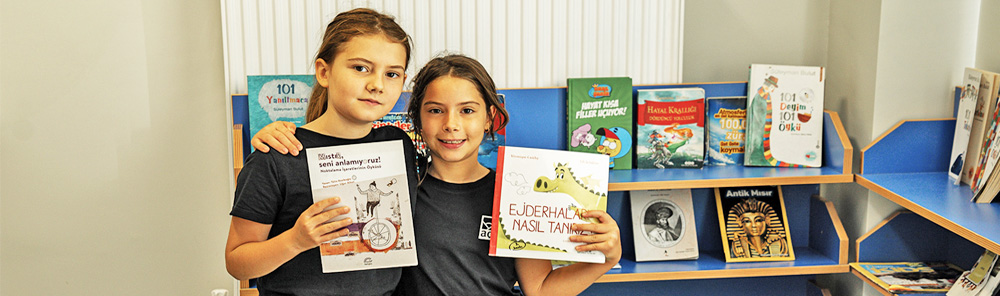
Classrooms are designed so that students can move freely and meet their learning needs. Each classroom has a reading corner. These corners are enriched with reading books and reference books brought by students and teachers. Students who finish their work early can spend their time reading in these corners. Different class corners are created according to the interests of the students in the class. The aim here is to meet the needs of students with different interests.
Classroom boards are used as teaching materials. There is a board for each subject area. These boards contain information, pictures, maps, etc. related to the themes covered. The aim is to enable students to perceive the subject visually.
Material
At Açı Primary School, a variety of materials and resources are utilized across all subjects to make learning objectives more tangible and to ensure lasting understanding, in alignment with curriculum outcomes. The booklets used in lessons are designed as original and rich learning materials that combine selected examples from different sources. These booklets help students gain a deeper understanding of topics and reinforce what they have learned.
The learning process is supported holistically through notebook work, online learning platforms, and library resources. Classroom environments are designed to encourage active student participation and to increase engagement in lessons. While worksheets help students grasp objectives and promote long-term learning, posters, charts, and visual materials make learning more engaging. The use of diverse materials, digital tools, and library resources enables students to explore information through multiple pathways, develop research skills, and think critically and creatively.
Homework Tasks
At Açı Schools, one of the core attitudes we aim to cultivate in our students is a sense of responsibility. Students are expected to plan and complete the tasks they undertake within the given timeframe, using their own knowledge and skills. This approach helps them develop time management, self-discipline, and independent study skills.
Assignments completed outside of school provide students with the opportunity to reinforce and internalize what they have learned in class. At the same time, such work nurtures curiosity, encourages the application of knowledge across different areas, and paves the way for new learning experiences.
At Açı Schools, we aim for our students to view homework not merely as an assignment, but as a process of taking responsibility of their own learning. In this way, our students develop a lifelong culture of learning.
In-School
Performance Tasks
Performance tasks are short-term tasks that enable the monitoring of mental processes such as researching, organizing, using, analyzing and synthesizing information. Performance activities are carried out in the classroom and at home during the specified weeks. These activities can also be done as group work. When the work is completed, students present their work to their friends or exhibit their work in designated areas.
Project
Project studies are long-term learning processes carried out at all grade levels. Students conduct research on topics that are selected in accordance with their grade level and academic program. Throughout this process, they may engage in various activities such as experiments, observations, field trips, model building, surveys, interviews, and creating photo albums. Under the guidance of project supervisors, students plan, develop, and complete their work. Completed projects are presented to classmates and families, allowing students to share their learning journey and achievements.
Observations and Experiments
In Science and Social Studies classes, the observation method is used effectively to achieve many learning objectives. Students systematically observe a particular situation or an experiment they have conducted, prepare reports based on their observations, and draw conclusions from the data they collect. Throughout this process, students develop their research, analytical, and interpretive skills by making inferences through experimentation and observation.
Effort-Success
Effort-Success
At Açı Primary School, assessment and evaluation processes are conducted to promote learning and support each student’s individual development journey. The main goal of these practices is to identify students’ strengths and areas for growth, make the progress they achieve over time visible, and guide them in setting goals for their next steps.
In the evaluation process, students’ effort, academic competence, and skills are considered separately yet in relation to one another.
· Effort refers to the student’s level of engagement, motivation, and sense of responsibility in the learning process.
· Academic competence reflects the degree to which the student meets the learning objectives and demonstrates mastery of subject matter.
· Skills encompass the student’s ability to apply knowledge, solve problems, communicate effectively, and collaborate with others.
This comprehensive approach is used not only to assess individual student development but also to evaluate the effectiveness of the curriculum and the overall quality of the teaching process.
Tracking Lists
The most important focus of our assessment and evaluation approach is to evaluate effort as well as success. Açı Schools adopt an assessment and evaluation practice that not only focuses on the results but also takes into account the processes and efforts.
Students’ achievements are evaluated through a variety of assessment tools and their performance within these tools. The diversity of assessment methods aims to support each student’s development by taking into account individual differences in learning.
Throughout the evaluation process, it is essential to regularly monitor all of the students’ work — including homework, classroom activities, projects, field trip reports, worksheets, and booklets.
At Açı Primary School, teachers use tracking lists to record their daily observations regarding students’ academic work both inside and outside the classroom. These records serve as a guide in identifying the general needs of the class as well as the individual areas of development for each student. Based on the data gathered from these observation notes, teachers plan subsequent learning activities and adjust the teaching process accordingly.
Açı Reports
At Açı Primary School, Açı reports are given in November, January, April and June. Açı reports evaluate students’ progress and indicate what they have learnt and what they need to learn more for specific course objectives. In the reports given in January and June, branch courses are also evaluated.
1-3. While only effort is evaluated in the lower grades, starting from the 4th grade, both effort and achievement are assessed together. The main purpose of Açı Reports is not to focus on what the student cannot do, but to make visible the effort, growth, and progress potential demonstrated throughout the learning process.
Akat Mah. Yeşilay Sok. No: 4/1,
34335 Akatlar, Beşiktaş – İstanbul
+90 212 349 05 00
Weekdays: 06.30 – 21.00
Weekends: 07.00 – 17.00
Kemer Mah. Yüzyıl Işıl Sok. No: 2,
34773 Bahçeköy, Sarıyer – İstanbul
+90 212 349 41 00
Our campus is open 24/7.
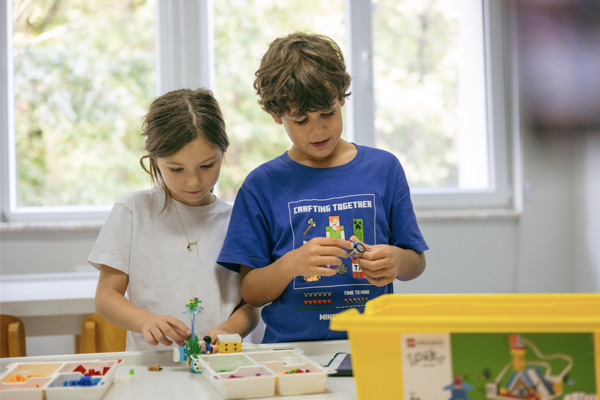
Our elementary schools offer a learning environment where with effective teaching techniques and methods students’ individual differences are taken into consideration and they are given opportunities to develop their academic, social and emotional skills.