 We are one of the leading educational institutions in Turkey with approximately 1700 students from different age groups and nearly 550 teachers and colleagues.
 We are one of the leading educational institutions in Turkey with approximately 1700 students from different age groups and nearly 550 teachers and colleagues.
Sustainable development is based on meeting the needs of the present without compromising the ability of future generations to meet their own needs. It brings economic and social development together with environmental responsibility. This approach evolved into a global framework with the 2030 Agenda for Sustainable Development. By placing sustainability at the heart of economic and social development, sustainable development articulates a shared vision for a better life in which the fundamental needs and aspirations of all people can be met.
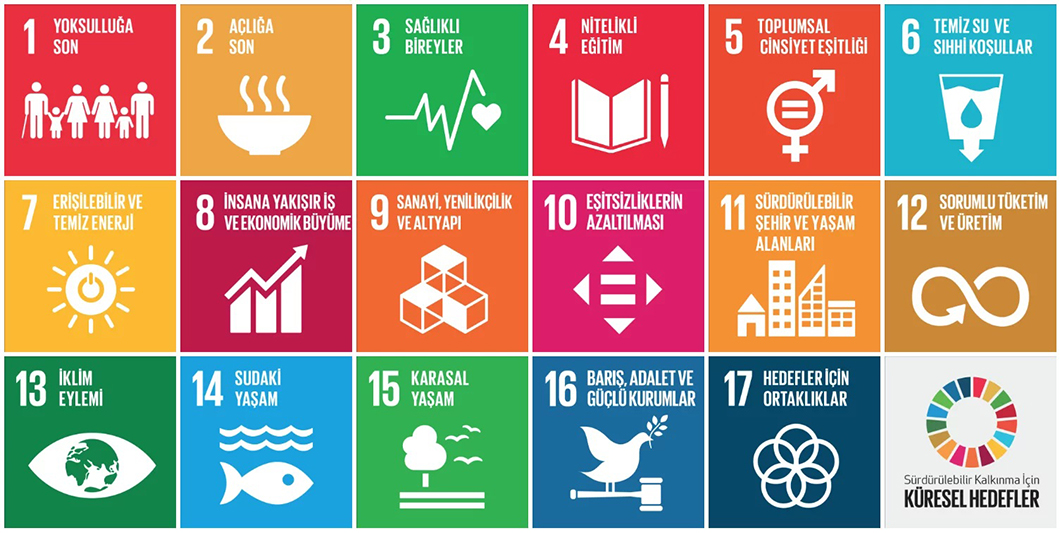
The 2030 Agenda comprises 17 Sustainable Development Goals (SDGs) and 169 targets, addressing social priorities such as ending poverty and hunger, reducing inequalities, ensuring access to quality education and healthcare, providing clean water, promoting decent work and economic growth, alongside environmental sustainability. It establishes a shared vision for all countries—developed and developing alike—and calls for global cooperation and collective action.
At Açı Schools, we embrace the principles of sustainable development and support our students in building knowledge and awareness around sustainability, developing a sense of global responsibility, and taking meaningful action towards a sustainable future.
Accordingly, sustainability at Açı Schools is not limited to individual projects. It is approached as a whole-school commitment embedded across our educational programs and everyday school life, with outcomes monitored and practices continuously improved based on data. The relationship between initiatives carried out at different age levels and the Sustainable Development Goals is regularly reviewed, enabling us to support our students’ development in sustainability throughout their years at Açı.
To monitor the impact of this approach on our students and identify areas for further development, we administer a Sustainability Awareness Survey to our Grade 11 and Grade 12 students each year. The findings help us identify students’ levels of awareness and areas for development, and inform the priorities and actions we plan for subsequent periods.
We extend this work to our teachers as part of our commitment to developing a culture of sustainability across the entire school community. By assessing teachers’ current levels of awareness, strengths, and areas for development, we have developed an action plan to strengthen our whole-school approach in a more comprehensive and systematic way.
Our long-standing sustainability efforts at Açı Schools have also connected with the international community through our commitment to the United Nations Sustainable Development Goals and our membership in the Global Schools Program network. This membership enables us to strengthen our existing work through international resources and educational networks, enrich our practices through the exchange of different approaches, and further support the continuity of our development in sustainability.
As Açı Schools, we aim to teach our students to use natural resources efficiently, starting from the youngest age groups, and to minimize their ecological footprint throughout all processes.
Consumption beyond the need and without considering the environmental impact jeopardizes equal access to food, depletes natural resources such as energy, water and air, and creates piles of garbage. The aim of the Green Generation Restaurant Project, which was launched and carried out in cooperation with Boğaziçi University and WWF-Turkey in the 2017-2018 academic year, is to lead change by focusing on this main problem.
In order to give the right approach and values to our future generations, we, as Açı Schools Sarıyer Campus, took part in this project in the 2017-2018 academic year and experienced the whole process with our students. As the “first school” to take part in this project, we wish to be a pioneer for all other schools, and we added our green office project in our high school in the 2019-2020 academic year.
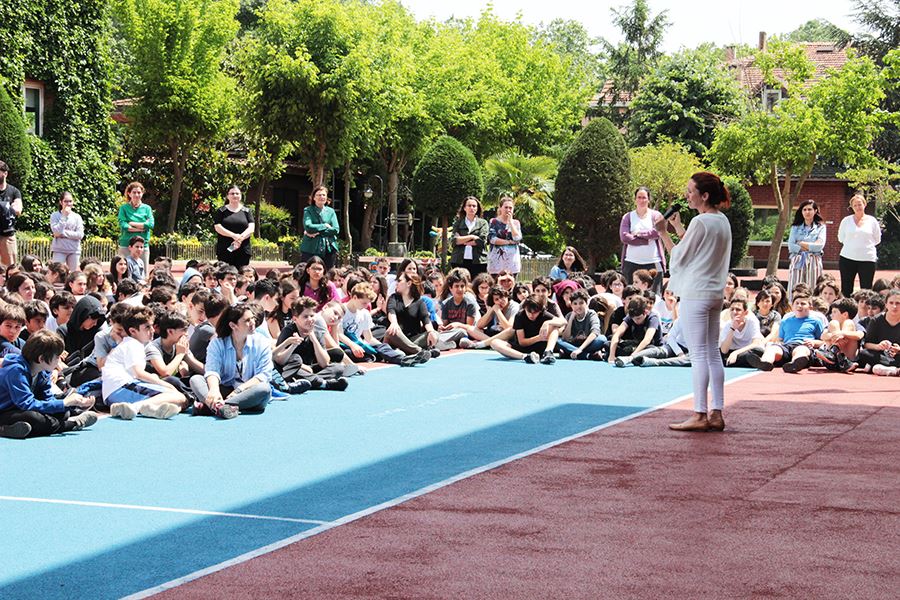
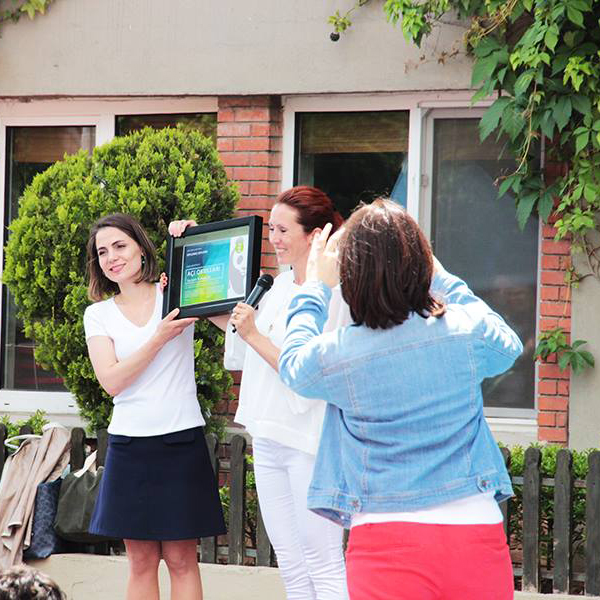
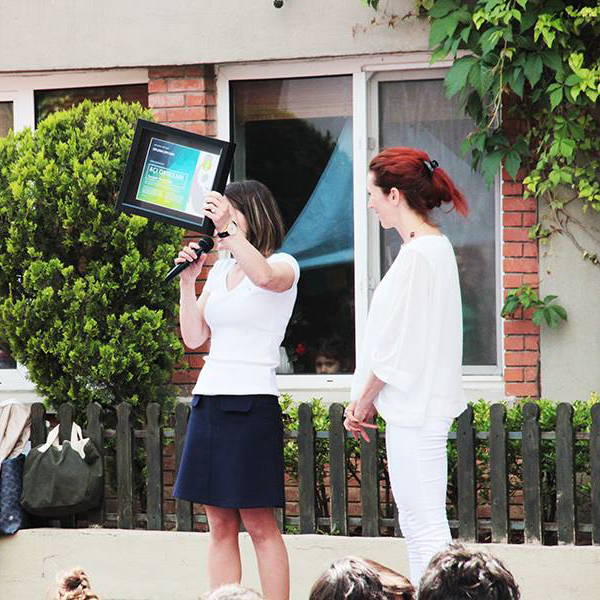
In 2018, our school teachers were trained on “Sustainability Literacy” by Dr. Ahmet Aydemir. Following this, we explored curriculum development initiatives that focus on instilling sustainability principles across a range of subjects and grade levels. We aimed to raise a generation of informed global citizens capable of addressing complex societal and environmental challenges by aligning our teaching strategies with the United Nations’ Sustainable Development Goals, and embarked on curriculum development efforts to further enrich existing practices.
We continue our efforts to enhance the educational journey with a sustainability perspective.
Our work on composting and the recovery of organic waste at Açı Schools began in September 2019 with the establishment of a composting center on our campus. What started with approximately 10 kg of organic waste generated in our cafeteria each day has evolved over time, and our system now has the capacity to compost up to 30 kg of organic waste per day.
Through composting, organic waste generated in our cafeteria is diverted from landfill and allowed to decompose naturally, returning nutrients to the soil and transforming waste into a valuable resource. In addition to reducing organic waste, this process contributes to maintaining natural cycles.
Drawing on the experience we have gained since 2019, we have continued to develop our composting equipment and methods in line with the conditions and needs of our campus. We have also considered the educational dimension of the process to be an integral part of the initiative.
At different times, our students have taken an active role in separating, composting, and returning organic waste to the soil, under the leadership of the Sustainability Committee and with the participation of students from different elective courses. In doing so, they have had the opportunity to experience firsthand how something regarded as waste can be transformed into a valuable resource.
Our composting work continues today as an evolving practice that supports the circular use of organic waste on our campus and encourages our students to take an active role in the process.
At Açı Schools, one of our initiatives to promote the efficient use of water resources began with a Grade 7 student’s research project on rainwater harvesting during the pandemic. The student’s work was brought into the school environment and developed into a practical application, with collected rainwater being used to irrigate plants in our greenhouse.
The initiative has since evolved, leading to the installation of systems at our Sarıyer and Akatlar campuses that collect rainwater from rooftop surfaces. The collected water is used by our students to irrigate the plants they grow in our greenhouses.
This practice makes the efficient use of water a natural part of school life while giving our students the opportunity to experience sustainable resource use firsthand. By observing how rainwater can be collected and reused, students connect their understanding of water conservation with everyday life.
Our greenhouse in our Sarıyer campus is used as an important tool for different student groups in kindergarten, primary and secondary schools to grow plants and thus realize nature, plants and our connection with the soil and nature. Our students at different levels gain knowledge and experience about sustainable agriculture practices with different types of plants grown using compost obtained from our school’s cafeteria waste and water obtained from rainwater harvesting, and share what they have learned with all their friends at school.
As Sarıyer Açı Secondary School Environment Committee, one of our primary goals is to raise our students’ awareness about sustainable and ecological living. In this context, we are planning some special activities within the scope of this week, which has been in our program since 2021. Within the scope of the week, we aim to raise awareness of our students about what they can do for a sustainable world with interviews, morning chats, recess activities, workshops, plant planting and recognition workshops, ecological bazaar, in-class and extracurricular activities specific to the week.
In 2012, as part of the “Seven Trees for My City” campaign launched in collaboration with ÇEKÜL, we completed our first Açı Forest in Sahil Yenice Village, Balıkesir, Bandırma, by contributing 10,000 saplings to the project.
Today, we are expanding our environmental responsibility by creating our second Açı Forest within the ÇEKÜL 7 Trees Forests initiative in the Keşan area of Edirne.
This time, our focus is on the impact of vehicles, an important part of our daily lives, on natural resources. Through our “Green Kilometers” campaign, we aim to make the consumption of natural resources associated with vehicle use more visible and to restore a portion of these resources to nature.
Through our website, you can enter your vehicle’s make, model, fuel type, and year of manufacture to see an estimate of its annual natural resource consumption. You can then contribute to our Açı Forest to help restore a portion of this consumption to nature.
The cost of one sapling is TRY 150.
Together, we are growing our second Açı Forest and turning our responsibility towards nature into a tangible contribution.
To join our campaign and explore the natural resource consumption associated with your vehicle, please visit Green Kilometers.
As part of our commitment to making sustainable ways of living and environmental responsibility an integral part of school life, we decided in May 2023 to transform the building of Wake-Up Cafe, located on our high school campus, into an ecological building.
In October 2023, student-led work on the project began under the leadership of 17 volunteer high school students interested in environmental impact and the fields of architecture and engineering. The students aimed not only to design an environmentally responsible building, but also to develop a model that could inspire the wider student community and engage them in the process.
We planned the process together with Dr. Nilüfer Özak (Architect, Ph.D.), who is recognized for her work bringing architectural design, innovation, functionality, and social benefit together. Throughout the project, students had the opportunity to explore and experience how social and environmental impacts, cultural values, and local characteristics can be integrated into design processes.
The project enabled our students to explore sustainability not simply as an environmental issue, but as a way of thinking that brings together design, quality of life, social benefit, and innovation.
In the subsequent stages of the project, we extended our sustainability work to Büyükdere Nursery with our club students and developed the “Sustainable Living Center” project. Through this initiative, we supported our students in exploring the relationship between nature, the environment, and urban life, and in translating different dimensions of sustainable living into tangible ideas through creative design processes.
You can watch the video below featuring the work carried out during the 2023–2024 academic year.